Home > News > July 2025 Manga Predicts Japan Disaster, Sparks Fear of 'The Big One', Prompts Holiday Cancellations
July 2025 Manga Predicts Japan Disaster, Sparks Fear of 'The Big One', Prompts Holiday Cancellations
- By Henry
- Jun 27,2025
Over the past several weeks, a once-unknown manga has sparked widespread attention both within Japan and internationally. In *“The Future I Saw” (Watashi ga Mita Mirai)*, author Ryo Tatsuki claims to have foreseen a massive natural disaster set to strike Japan in July 2025. This prediction has reportedly influenced some travelers to cancel their summer plans to visit Japan, while simultaneously going viral across Japanese social media platforms. But why are some people seemingly taking Tatsuki’s visions seriously? And how has this manga become linked to an upcoming Japanese horror film?
Originally published in 1999, Ryo Tatsuki’s *“The Future I Saw”* is based on her personal dream diaries, which she has maintained since 1985. The manga features Tatsuki as a character and includes prophetic imagery, such as postcards floating above her head depicting various future events. One of these reads “March 2011: A Great Disaster.” Following the catastrophic Tohoku Earthquake and Tsunami in March 2011, the manga resurfaced in public consciousness, with out-of-print editions selling for high prices online.
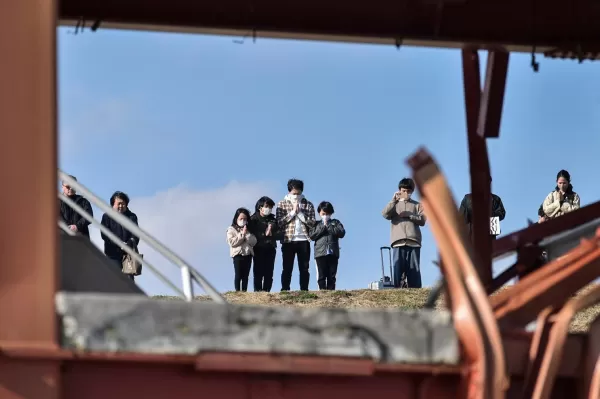
In 2021, a revised version titled *“The Future I Saw: Complete Edition”* was released, adding a new prediction: that a natural disaster even greater than the 2011 event will occur in July 2025—specifically, a tsunami three times the size of the one from 2011. Given that her earlier forecast appeared to come true, speculation surrounding her latest vision rapidly spread across social media in Japan and beyond.
According to reports, Tatsuki’s 2025 prediction has led some individuals, particularly in Hong Kong where the manga is available in translation, to reconsider travel plans to Japan this summer. While the overall impact remains difficult to quantify, it appears most pronounced among Hong Kong audiences. Local media also notes that Hong Kong-based fortune-teller and TV personality Master Seven has amplified the concern, stating that Japan's earthquake risk will be elevated between June and August 2025.
Domestic Japanese news coverage has focused on airline responses to the growing anxiety. As reported by ANN News and other outlets, Hong Kong Airlines recently canceled its three weekly flights to Sendai—a city heavily affected by the 2011 disaster. Greater Bay Airlines has similarly reduced direct flights from Hong Kong to Sendai and Tokushima between May and October, citing decreased demand partly attributed to fears over the predicted disaster and broader economic concerns. Miyagi Prefecture Governor Yoshihiro Murai addressed the situation during a press conference at the end of April, calling the predictions “unscientific” and encouraging tourists not to let them affect their travel decisions.
As mainstream media continues to cover the manga and its influence on tourism, interest in *“The Future I Saw”* has surged. By May 23, the Complete Edition had sold over one million copies. This renewed popularity coincides with the release of a new Japanese horror film titled *“July 5, 2025, 4:18 AM,”* scheduled to premiere in theaters on June 27. The movie centers around a protagonist whose life begins to unravel as her birthday approaches the ominous date described in Tatsuki’s manga. Though inspired by the manga’s premise, the film’s specific date and time were not mentioned by Tatsuki herself.
Unfortunately, some social media content has inaccurately conflated the film’s title with Tatsuki’s original prophecy, blending scientific facts with sensationalized warnings. In response, publisher Asuka Shinsha issued a statement clarifying that Tatsuki did not reference the exact date and time depicted in the movie title. The publisher urged the public to avoid being misled by fragmented or misleading information circulating online and in the press.
While Japan experiences frequent natural disasters ranging from earthquakes to floods, scientific consensus confirms that precise earthquake prediction remains impossible. Seismologists estimate a 70–80% chance of a Nankai Trough megaquake occurring within the next 30 years, potentially causing massive destruction and tsunamis. However, the Japan Meteorological Agency explicitly labels specific date predictions like Tatsuki’s as hoaxes on its official website. It seems that given Japan’s vulnerability to seismic activity, Tatsuki’s earlier “prediction” about 2011 may have simply been a coincidence.
On platforms like X (formerly Twitter), many Japanese users have expressed skepticism toward the media hype and public panic surrounding the manga. One user wrote, “It’s ridiculous to believe disaster predictions from a manga. The Nankai Trough quake could happen today or tomorrow anyway.” Tatsuki herself has responded to the attention, expressing hope that increased awareness leads to better disaster preparedness, but urging the public not to rely too heavily on her visions and instead follow expert advice.