Marvel在1980年代是否达到巅峰?
- By Michael
- May 03,2025
The 1970s marked a period of significant transformation for Marvel Comics. It was a time when iconic storylines such as "The Night Gwen Stacy Died" and the intriguing encounter of Doctor Strange with God were introduced, setting the stage for the creative explosion of the 1980s. This new decade saw legendary creators like Frank Miller, John Byrne, David Michelinie, Chris Claremont, Roger Stern, and Walt Simonson delivering their landmark contributions to Marvel's most celebrated titles. From Miller's gritty reinvention of Daredevil to Claremont's epic narratives in X-Men, these creators not only defined the characters but also ensured their enduring popularity into the present day. The 1980s can be considered Marvel's true golden age, a period of unparalleled creativity and storytelling that continues to influence the Marvel Universe.
Join us as we delve into Part 7 of our exploration of Marvel's essential issues, celebrating the rich history of the Marvel Universe.
More Essential Marvel
- 1961-1963: The Birth of a Universe
- 1964-1965: The Sentinels Are Born and Cap Dethaws
- 1966-1969: How Galactus Changed Marvel Forever
- 1970-1973: The Night Gwen Stacy Died
- 1974-1976: The Punisher Begins His War on Crime
- 1977-1979: Star Wars Saves Marvel From Bankruptcy
- The Dark Phoenix Saga and Other All-Time X-Men Stories
The Dark Phoenix Saga and Other All-Time X-Men Stories
Chris Claremont's defining run on the X-Men began in 1975, but it was during the early 1980s that he produced some of the franchise's most memorable stories. The Dark Phoenix Saga, spanning X-Men #129-137, stands out as one of the most renowned X-Men narratives ever. This epic tale, co-plotted and illustrated by John Byrne, sees Jean Grey's transformation into the Dark Phoenix, a formidable foe influenced by the cosmic entity and the Hellfire Club. This saga not only introduced key characters like Kitty Pryde, Emma Frost, and Dazzler but also featured one of the most poignant moments in X-Men lore with Jean Grey's ultimate sacrifice. Despite numerous adaptations, including the films X-Men: The Last Stand and Dark Phoenix, the animated series have arguably captured the essence of the story better, with full adaptations in X-Men: The Animated Series and a condensed version in Wolverine & the X-Men.
Following closely on the heels of the Dark Phoenix Saga, Days of Future Past in X-Men #141-142 is another landmark story. This two-issue arc, centered around the mutant-hunting Sentinels first introduced by Stan Lee and Jack Kirby, features an adult Kitty Pryde traveling back in time to avert a dystopian future triggered by the assassination of Senator Robert Kelly. This gripping narrative has been revisited and adapted into the 2014 film X-Men: Days of Future Past and the season arc of Wolverine & the X-Men.
The third iconic X-Men story from this era is found in X-Men #150, where a confrontation with Magneto nearly results in Kitty Pryde's death. This issue reveals Magneto's backstory as a Holocaust survivor, a pivotal moment that reshaped his character into a more complex figure.
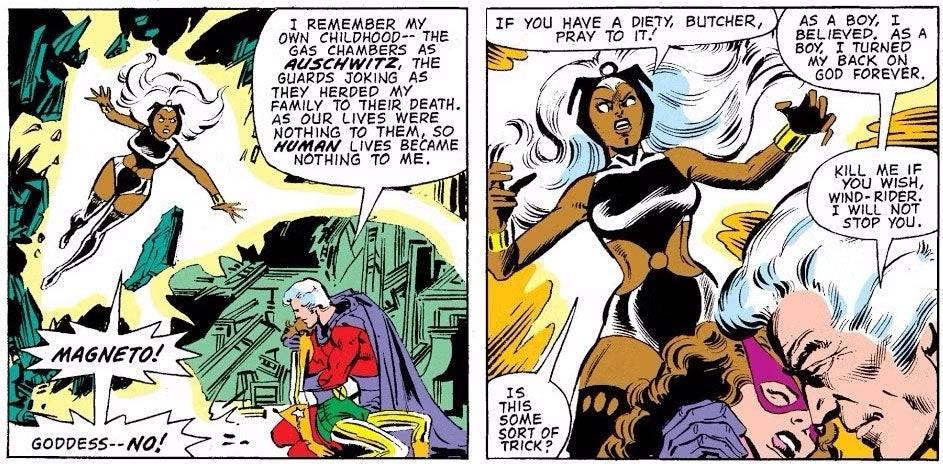 X-Men #150
The First Appearances of Rogue, She-Hulk, and the New Mutants
The 1980s also saw the introduction of significant new characters, particularly notable female heroes. Rogue, a fan-favorite X-Men member, debuted as a villain in Avengers Annual #10. Initially part of Mystique's Brotherhood of Evil Mutants, Rogue's powers were used to drain Carol Danvers, aka Ms. Marvel, leading to significant changes in both characters' arcs. This issue also tackled darker themes, including Carol's traumatic experience with Marcus Immortus.
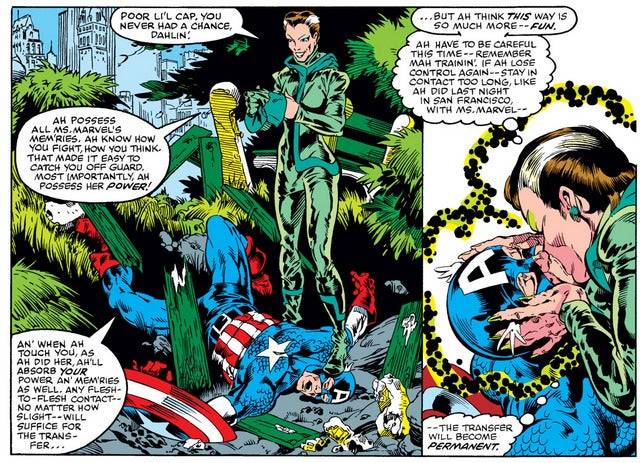 Rogue... as a bad guy in Avengers Annual #10.
Another major female character, She-Hulk, was introduced in Savage She-Hulk #1. Created by Stan Lee, Jennifer Walters, Bruce Banner's cousin, gains similar powers through a blood transfusion. While her initial series didn't capture widespread acclaim, She-Hulk's character flourished when she joined the Avengers and Fantastic Four, eventually leading to her portrayal by Tatiana Maslany in the MCU series.
The New Mutants, Marvel's first X-Men spin-off, debuted in Marvel Graphic Novel #4 before getting their own series. This team of teenage mutants, including Cannonball, Sunspot, Karma, Wolfsbane, and Dani Moonstar (later known as Mirage), brought fresh dynamics to the X-Men universe. Illyana Rasputina, aka Magik, joined the team in issue #15, significantly impacting the group's narrative.
Iconic Storylines for Daredevil, Iron Man, and Captain America
Daredevil #168 marks a transformative issue with Frank Miller's introduction of Elektra and a radical reimagining of Daredevil's world. Miller's subsequent run through issue #191 is a masterclass in gritty realism and noir storytelling, featuring pivotal moments like the introduction of Stick, battles with the Punisher, and the tragic death of Elektra. This run not only redefined Daredevil but also inspired subsequent adaptations, including the 2003 film and the 2015 Netflix series, with further continuation in the upcoming MCU series Daredevil: Born Again.
David Michelinie and Bob Layton's Doomquest in Iron Man #149-150 is another landmark story, marking Iron Man's first solo confrontation with Doctor Doom. This time-traveling adventure set in the era of King Arthur solidified Doom as a significant adversary for Iron Man, despite his primary rivalry with Mr. Fantastic.
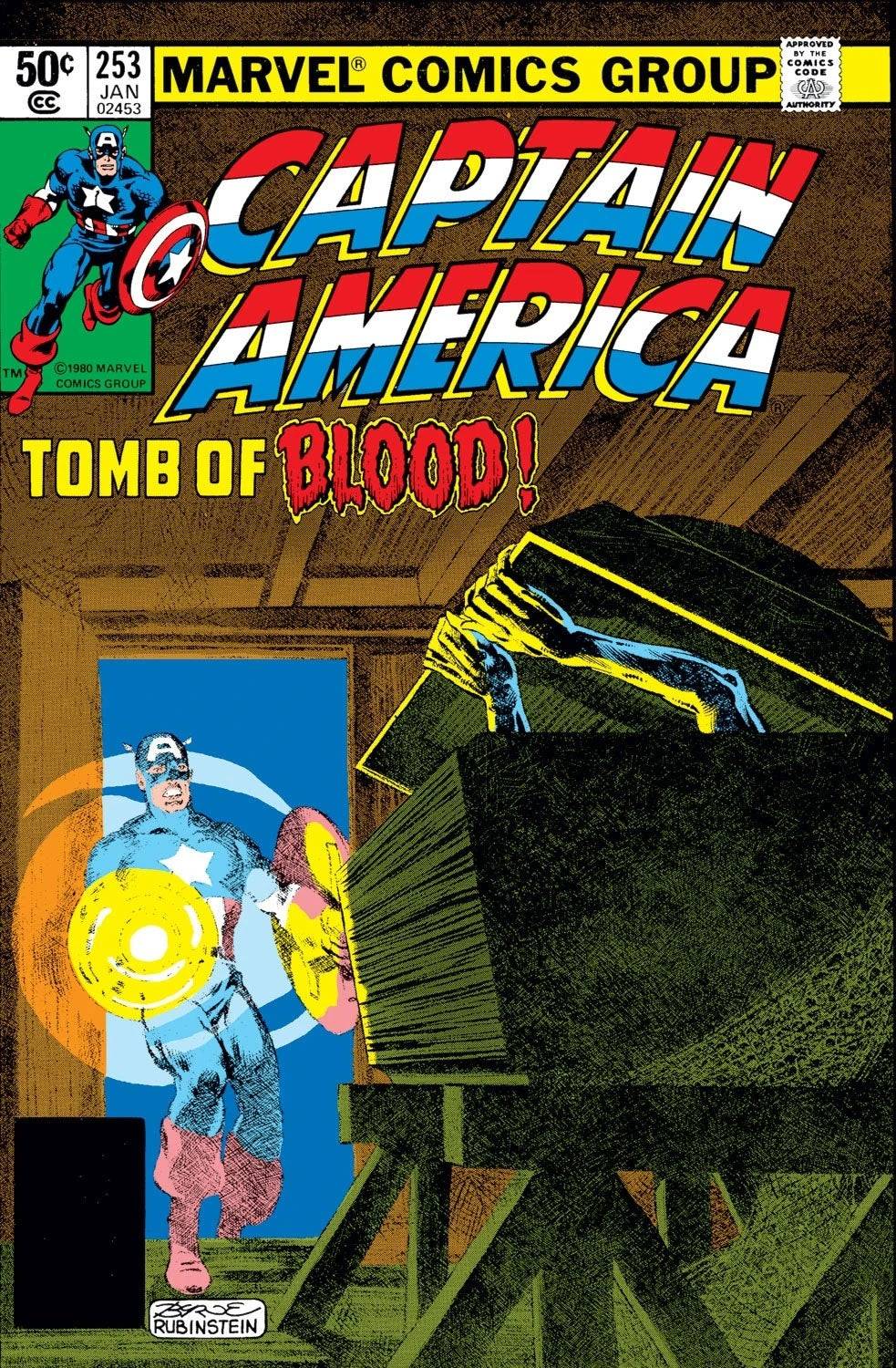 Captain America #253
Roger Stern and John Byrne's darker narrative in Captain America #253-254, featuring Cap's battle against the Nazi vampire Baron Blood, is another notable arc. This story, tied to Cap's WWII past, stands out for its intense storytelling and impactful artwork.
Moon Knight Becomes a Hero and Marvel Helps Create the G.I. Joe Mythology
Moon Knight's transition from antagonist to hero was solidified in Moon Knight #1. Initially introduced in Werewolf by Night #32, the character's full backstory and alternate personalities were explored in this issue, setting the stage for future narratives.
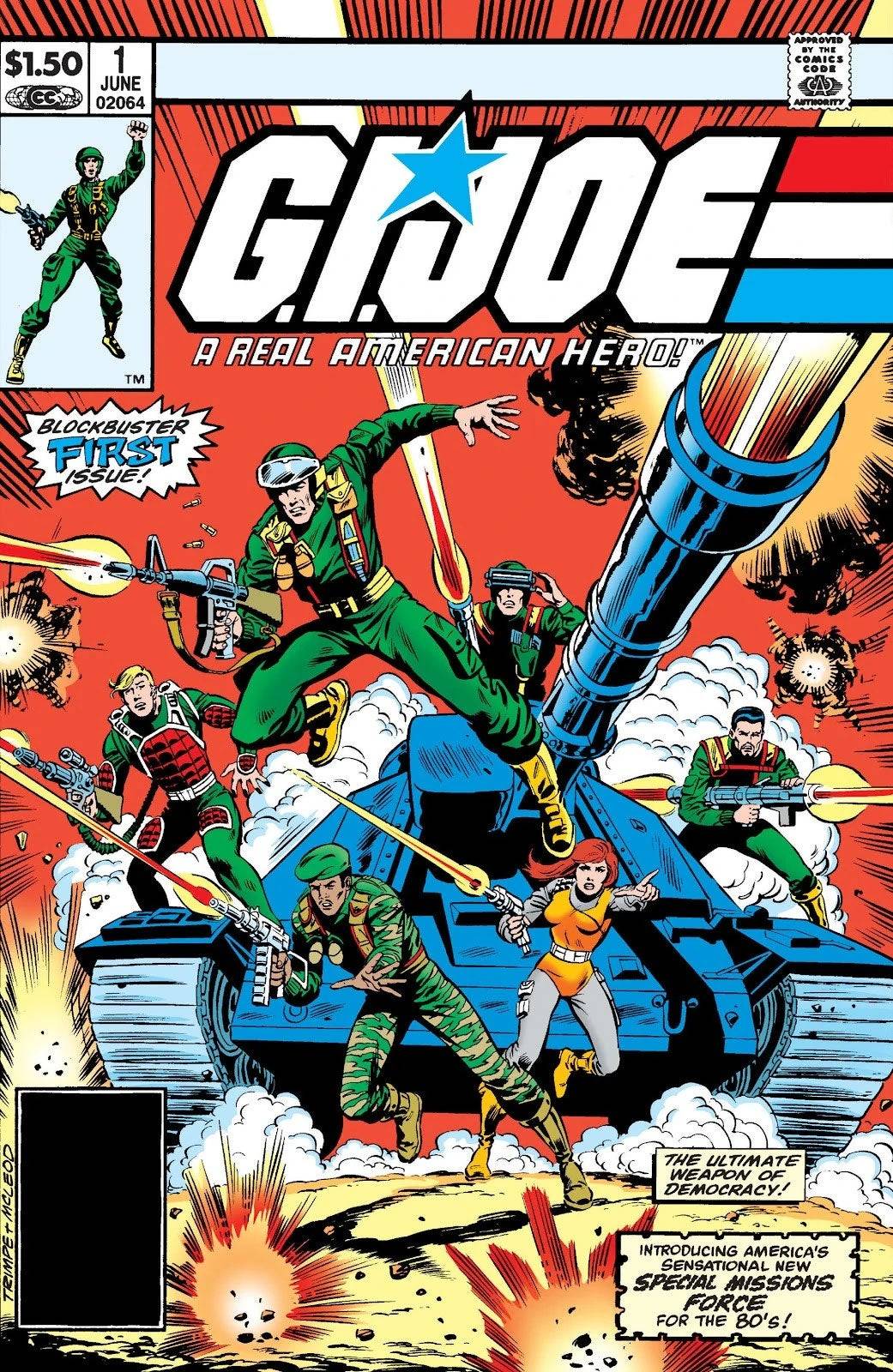 G.I. Joe #1
Although not owned by Marvel, the G.I. Joe franchise owes much of its character development to Marvel Comics. The Real American Hero series, starting with G.I. Joe #1, introduced iconic characters like Scarlett, Snake Eyes, and Storm Shadow, thanks to the creative work of Larry Hama and Archie Goodwin. Hama's storytelling not only made G.I. Joe a top-selling title but also appealed to a diverse readership, including women, due to its balanced portrayal of male and female characters.