RTX 5080 Upgrade on Old Hardware: Rough but Convinced Me of Multi-Frame Generation
- By Lily
- May 18,2025
The excitement of a new graphics card release is palpable, especially when Nvidia unveils the RTX 5080 with its groundbreaking DLSS 4 technology. As a gaming enthusiast, the prospect of enhanced visuals and frame rates through AI is tantalizing. Yet, my trusty but aging gaming PC, affectionately dubbed a "grandpa-build," made me pause. My RTX 3080 had served me well, delivering a steady 60 fps at 4K on max settings in my favorite games. However, its performance had declined to 30 fps, forcing me to lower settings—a compromise I loathed, given my passion for experiencing the full artistic vision of video games. But could my PC handle the RTX 5080?
Fortunately, the Nvidia GeForce RTX 5080 was compatible with my setup, supported by my 1000-watt PSU. Yet, integrating it into my system proved challenging. Despite my setup's age, it's not ancient; it boasts an AMD Ryzen 7 5800X processor, 32GB of RAM, and a Gigabyte X570 Aorus Master motherboard. Swapping out the graphics card should have been straightforward, but I hit a snag with the power cables. Assuming the RTX 3080's PCIe 8-pin cables would suffice for the RTX 5080, I was disappointed when the GPU's LEDs failed to light up.
After some troubleshooting, I realized I needed PCIe 12-pin cables. In a stroke of modern convenience, I used DoorDash to have a set of Corsair PCIe Gen 5 Type 4 600-watt power cables delivered from a Best Buy in another state. With the new cables installed, the GPU flickered to life, but another issue arose: the RTX 5080 couldn't fit properly into the PCIe x16 slot due to the bulky chipset fan on my motherboard. This forced me to use a PCIe x8 slot, which impacted performance.
Running benchmarks across five games, the RTX 5080's raw performance was underwhelming on my system. However, enabling DLSS 4 transformed my gaming experience. DLSS 4, Nvidia's super sampling technology, uses AI to enhance performance and image quality, with the RTX 50-series cards introducing Multi Frame Generation. This feature can generate up to three frames per true frame, though it's only available in supported games.
In Monster Hunter Wilds, a game notorious for poor optimization, my PC struggled to reach 60 fps at 4K on Ultra settings with RT High and DLSS disabled, maxing out at 51 fps. Enabling DLAA and regular frame generation boosted it to 74 fps, and switching to Ultra Performance mode pushed it to 124 fps. Similarly, in Avowed, the RTX 5080 initially delivered 35 fps at Ultra, 4K with RT on and DLSS disabled. Activating DLAA and Multi Frame Generation resulted in a staggering 113 fps—a 223% increase.
Oblivion: Remastered posed a unique challenge, with the RTX 5080 struggling to maintain 20 fps at Ultra, 4K, RT Ultra with DLSS off. Yet, with DLAA and Multi Frame Generation, it achieved 95 fps, soaring to 172 fps on Ultra Performance. In Marvel Rivals, a competitive title where every frame counts, the RTX 5080 managed 65 fps at Ultra, 4K with DLSS disabled, and 182 fps with DLAA and Multi Frame Generation. The lowest latency was achieved on Performance mode with standard frame generation, at 189 fps with 28ms latency.
Finally, testing Black Myth Wukong with its benchmark tool at Cinematic, 4K, DLSS 40% with RT Very High, the RTX 5080 hit 42 fps, jumping to 69 fps with frame generation enabled. These results underscored the transformative potential of DLSS 4, despite the RTX 50-series not showing a massive leap in raw performance.
While DLSS 4 isn't without its flaws—occasionally introducing fuzziness in textures and artifacts—it has revolutionized my gaming experience on an older setup. It's a reminder that you don't need a completely new PC to benefit from a new GPU. A compatible power supply and the right cables might be all you need. As for my setup's longevity, DLSS 4 and Multi Frame Generation have granted me at least a few more months of high-quality gaming before considering a full upgrade.
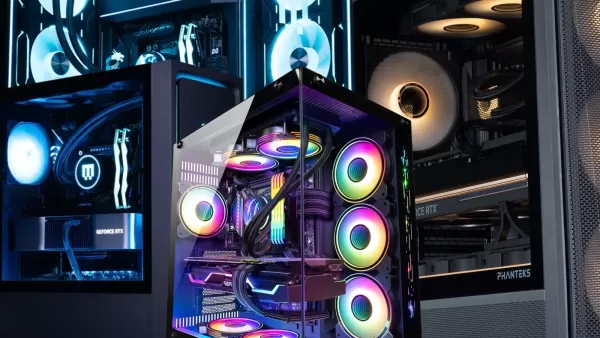 Installing the RTX 5080 – 4 Hours Later
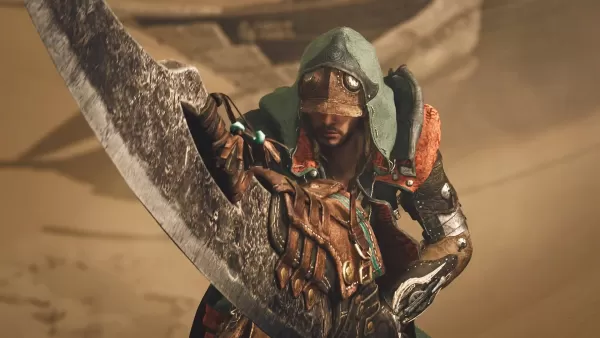 RTX 5080 Running on My Grandpa-Build
 You Don’t Need a New PC for a New GPU
Latest News
more >-

-

-
-

-

- No, I'm Not A Human Release Date and Time
- 10/21,2026