"Blades of Fire: First Look Preview"
- By Alexander
- May 12,2025
When I settled in to experience developer MercurySteam's latest creation, Blades of Fire, I anticipated a modern revival of the studio's Castlevania: Lords of Shadow series, infused with the contemporary flair seen in God of War. Yet, after an hour of gameplay, I found myself immersed in what felt like a Soulslike experience, albeit one where the focus was on weapon stats rather than traditional RPG character development. By the conclusion of my three-hour hands-on session, it became clear that Blades of Fire occupies a unique space: it draws from familiar genres yet crafts its own distinct identity through a blend of established mechanics and innovative concepts, resulting in a refreshing take on the action-adventure genre.
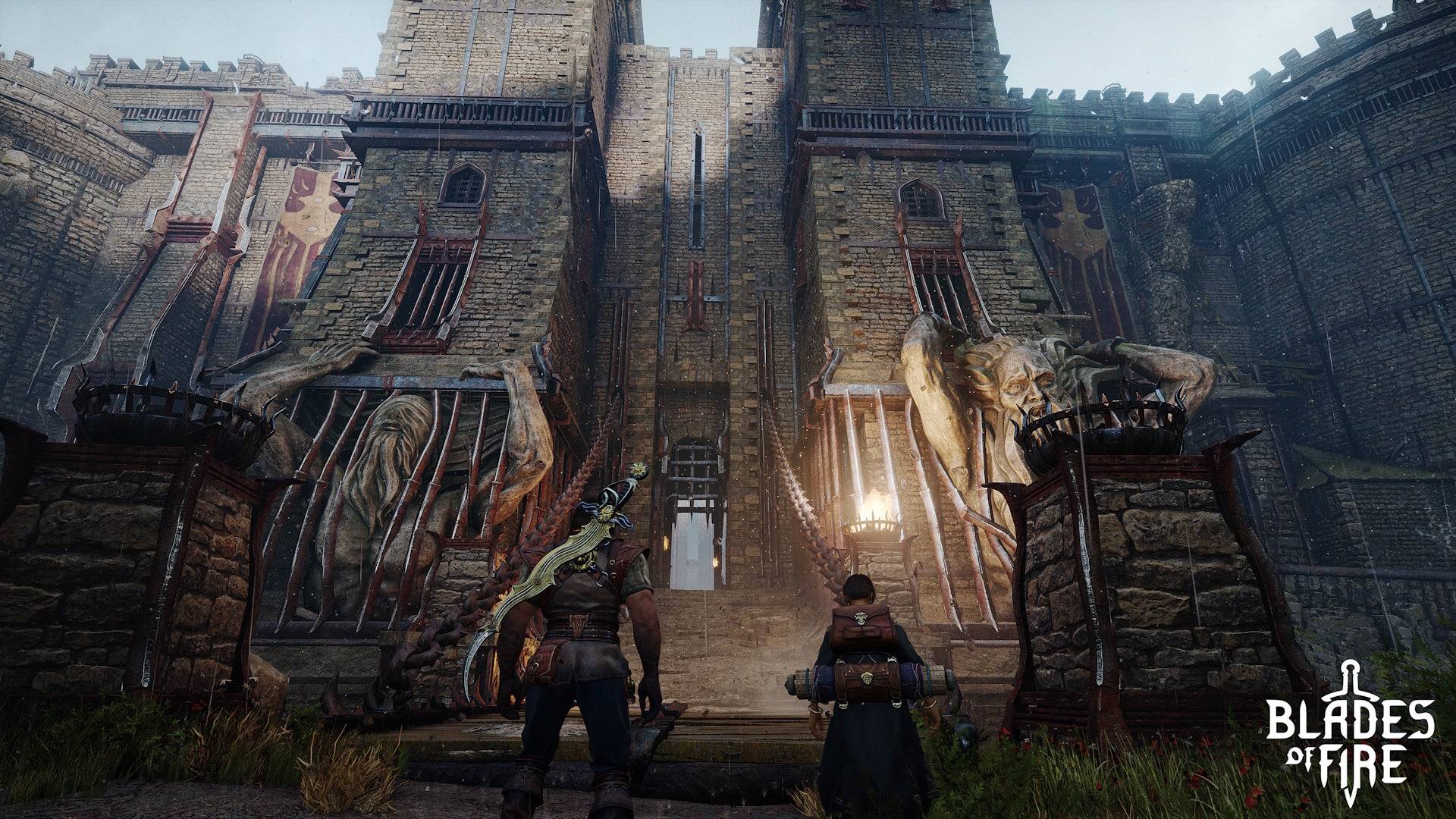
At first glance, Blades of Fire may remind you of Sony Santa Monica's God of War, particularly its Norse saga. The game's dark fantasy setting, powerful melee attacks, and close third-person perspective echo Kratos's journey. Throughout the demo, which covered the game's opening chapters, I navigated a labyrinthine map filled with treasure chests, aided by a young companion who assisted in puzzle-solving. Together, we sought out a mysterious woman living in a house atop a colossal creature. The game's nods to FromSoftware's work are also evident, with anvil-shaped checkpoints that replenish health potions and respawn enemies, adding a layer of familiarity that at times feels too pronounced.
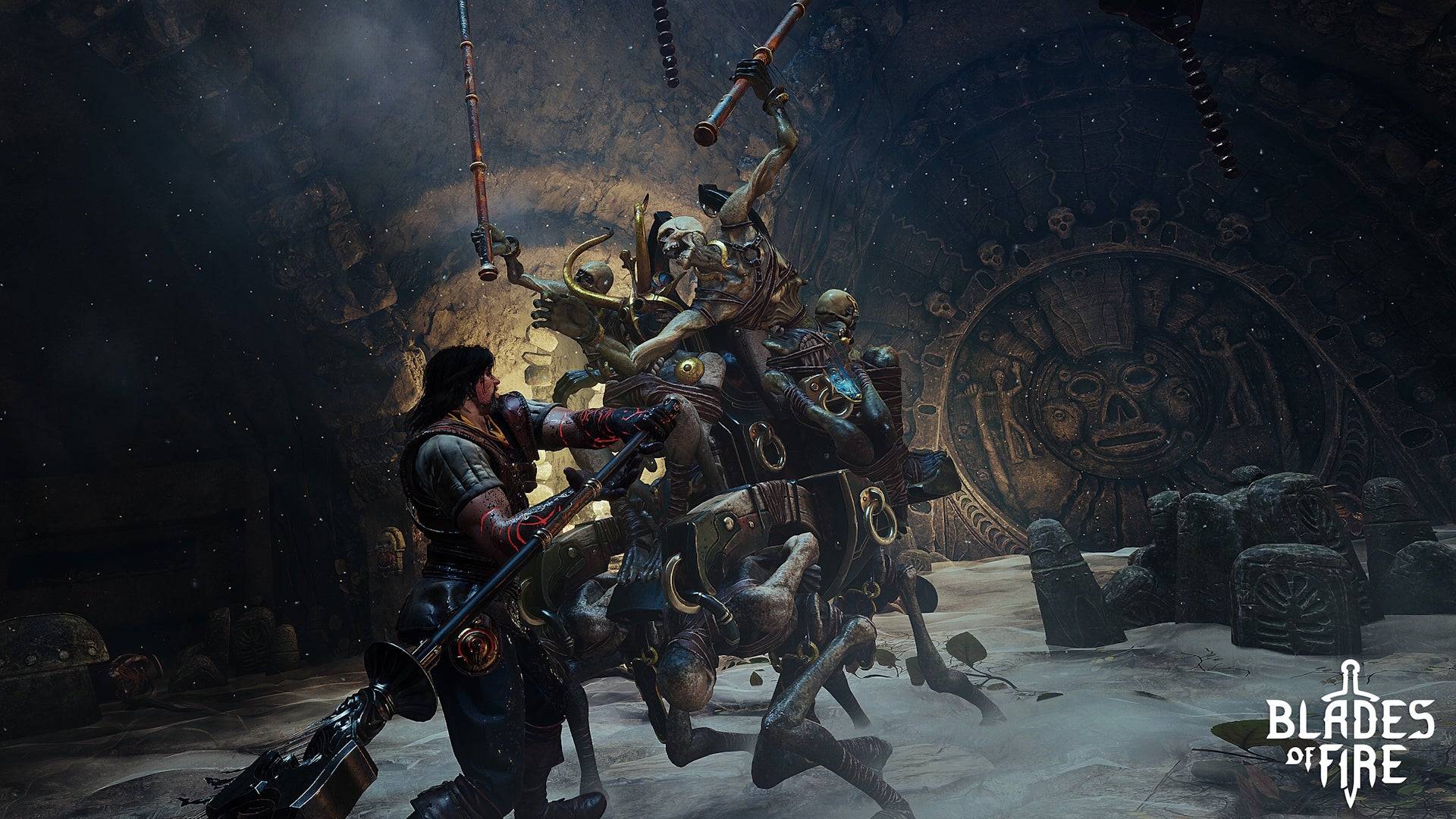
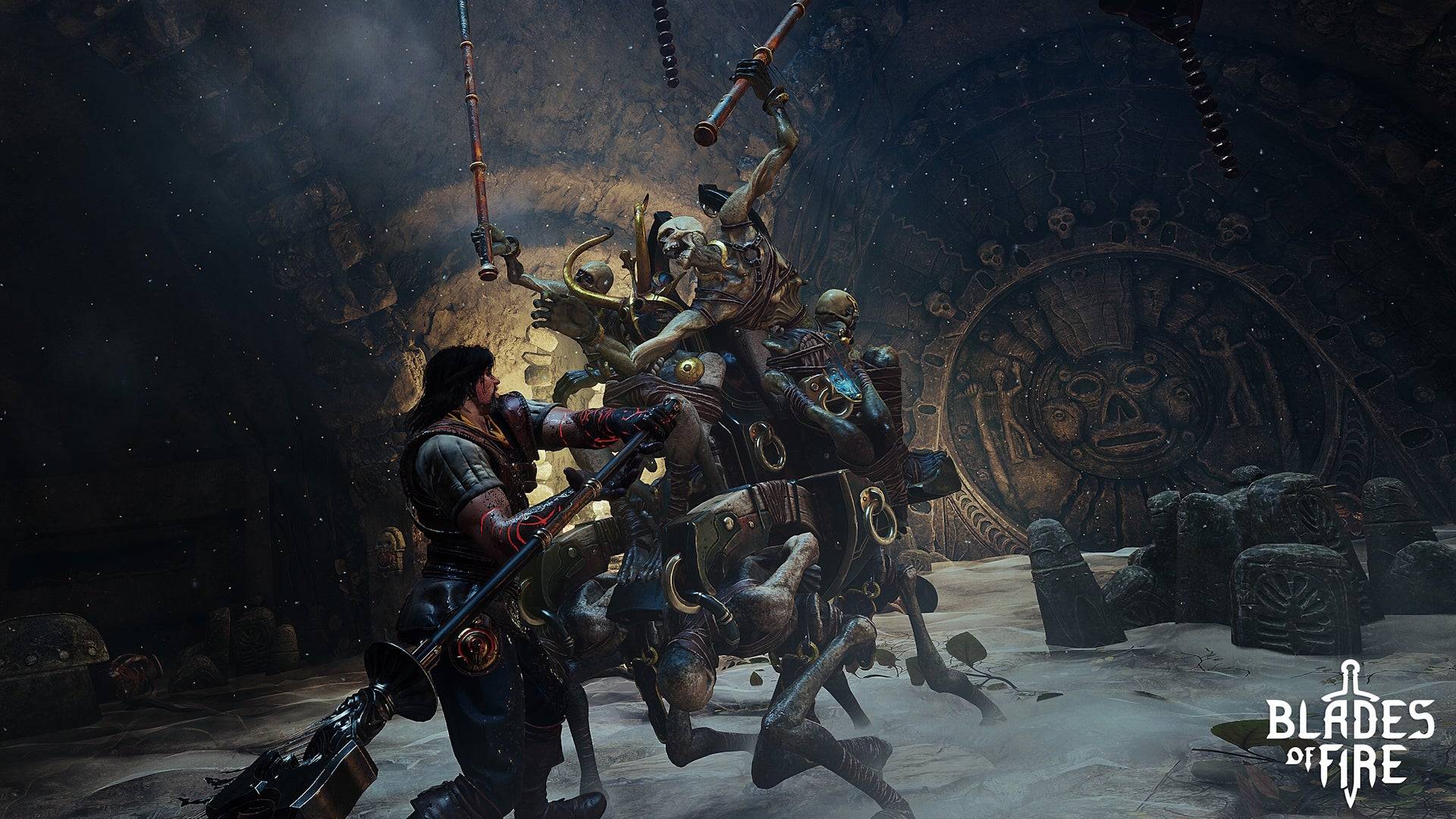 Blades of Fire features some deeply strange enemies that feel like dark cousins of Labyrinth's puppets. | Image credit: MercurySteam / 505 Games The game's world evokes a nostalgic 1980s fantasy atmosphere. Picture Conan the Barbarian mingling with its muscular warriors, or Jim Henson's Labyrinth creatures bouncing on bamboo pogo sticks. The narrative, too, carries a retro charm: an evil queen has petrified the world's steel, and you, as Aran de Lira, a blacksmith demigod, must vanquish her to restore the metal. However, the story, characters, and writing may not stand out, feeling somewhat generic and reminiscent of many overlooked Xbox 360-era tales.
Where Blades of Fire truly excels is in its mechanics. The combat system, driven by directional attacks utilizing each controller's face button, is both intuitive and rewarding. On a PlayStation controller, triangle targets the head, cross the torso, while square and circle swipe left and right. By reading an enemy's stance, you can strategically break through their defenses. For instance, a soldier guarding their face can be defeated by aiming low for the gut, resulting in satisfyingly visceral strikes.
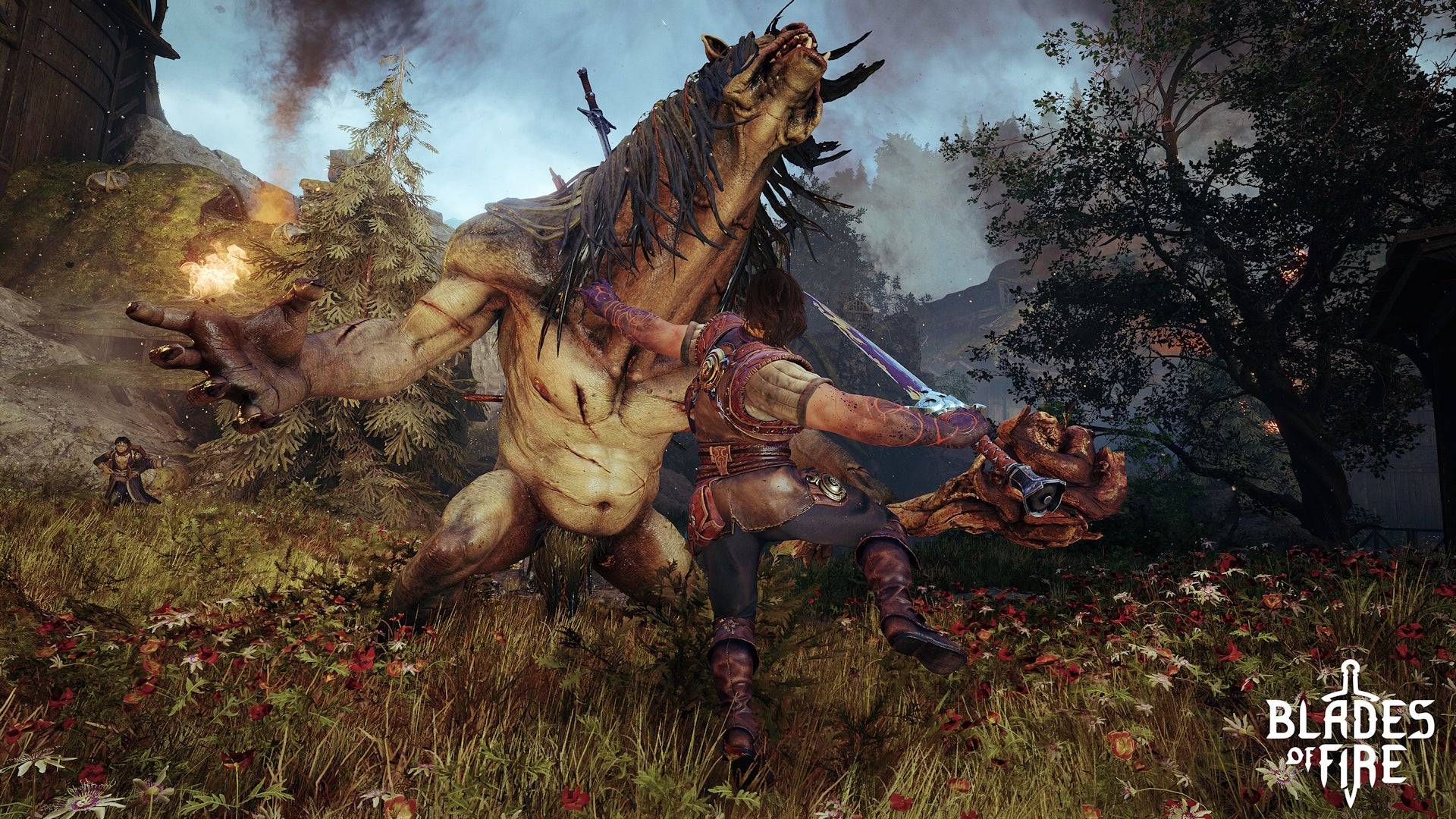
The combat system shines in encounters like the demo's first major boss, a slobbering troll with a secondary health bar that can only be depleted after dismembering it. The limb removed depends on your attack angle, allowing you to disarm the troll by severing its club-wielding arm. Even more intriguing, you can slice off the troll's face, rendering it blind and vulnerable until it regenerates.
Weapons in Blades of Fire demand meticulous attention. Unlike most games, your weapons degrade over time, requiring sharpening stones to maintain their edge. Each stance, whether slashing or thrusting, wears down independently, adding a tangible feel to your armaments. Similar to Monster Hunter, you'll need to find moments to sharpen mid-battle, but all weapons have a durability meter that eventually leads to breakage. When that happens, you can repair them at an anvil checkpoint or melt them down to forge anew, highlighting the game's most innovative feature: the forge.
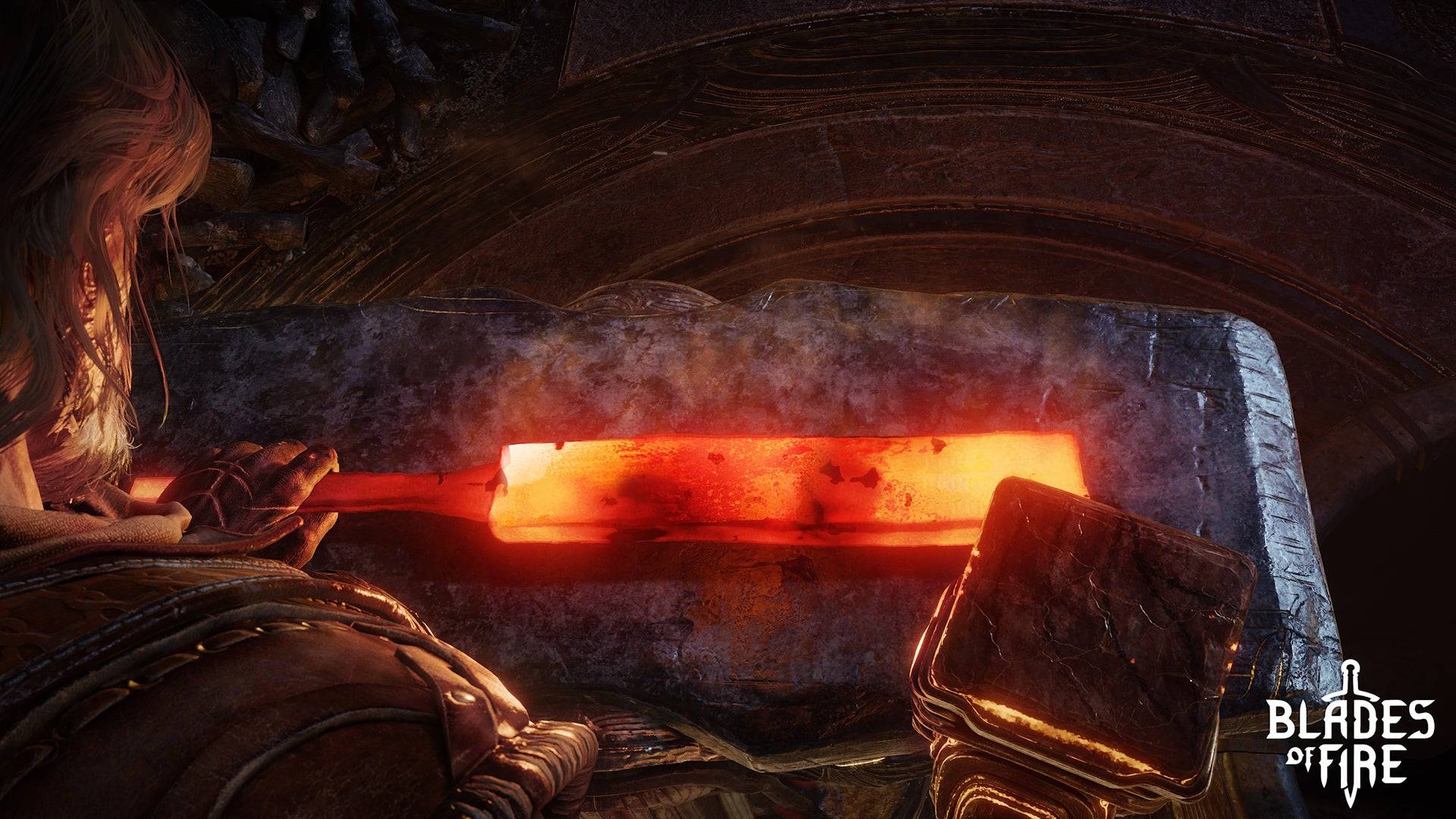
MercurySteam's weapon crafting system is remarkably detailed. Rather than discovering new weapons, you start from scratch at the forge. You begin by selecting a basic template, which Aran sketches on a chalkboard, then tweak and modify it. For example, when crafting a spear, you can adjust the pole's length and the spearhead's shape, directly impacting the weapon's stats. Different materials affect weight and stamina demands, fostering a genuine sense of crafting. You even name your creation, further personalizing your weapon.
The crafting process doesn't end there. You must then physically forge your weapon at an anvil through an intricate minigame where you control the length, force, and angle of each hammer strike. The goal is to match a curved line on the screen with vertical bars, akin to a graphic equalizer, in as few strikes as possible to avoid overworking the metal. Your performance earns a star rating, which determines how often you can repair your weapon before it's lost forever.
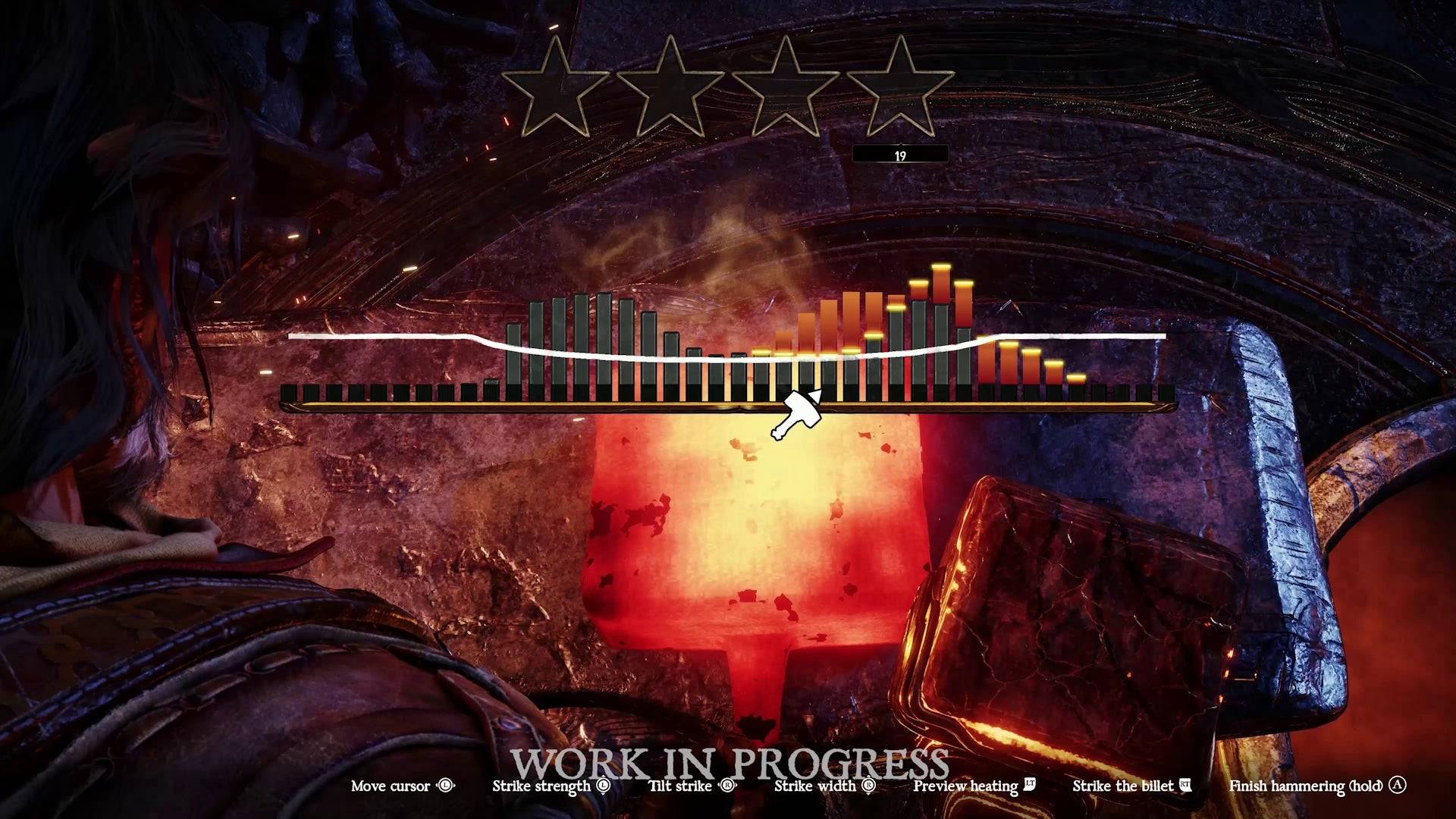 The forging minigame is a great idea that feels a little too obtuse. | Image credit: MercurySteam / 505 Games The forge concept is ambitious, adding a skill-based layer to what is typically a menu-driven system. However, the minigame felt frustratingly unclear even after multiple attempts, suggesting a need for better tutorials or adjustments before launch.
The forge's core idea extends beyond the demo, aiming to create a deep connection between players and their weapons throughout a 60-70 hour journey. As you explore and gather new metals, you can reforge your weapons to enhance their properties, ensuring they remain effective against increasingly challenging foes. The death mechanic further emphasizes this bond: upon defeat, you drop your current weapon, which remains in the world, challenging you to recover it.
MercurySteam's homage to Dark Souls is evident, influenced by FromSoftware's impact on action games and the studio's own history with Blade of Darkness, a precursor to the Souls series. Yet, Blades of Fire transcends these influences, reinterpreting established systems into a broader canvas of ideas that set it apart from its inspirations.
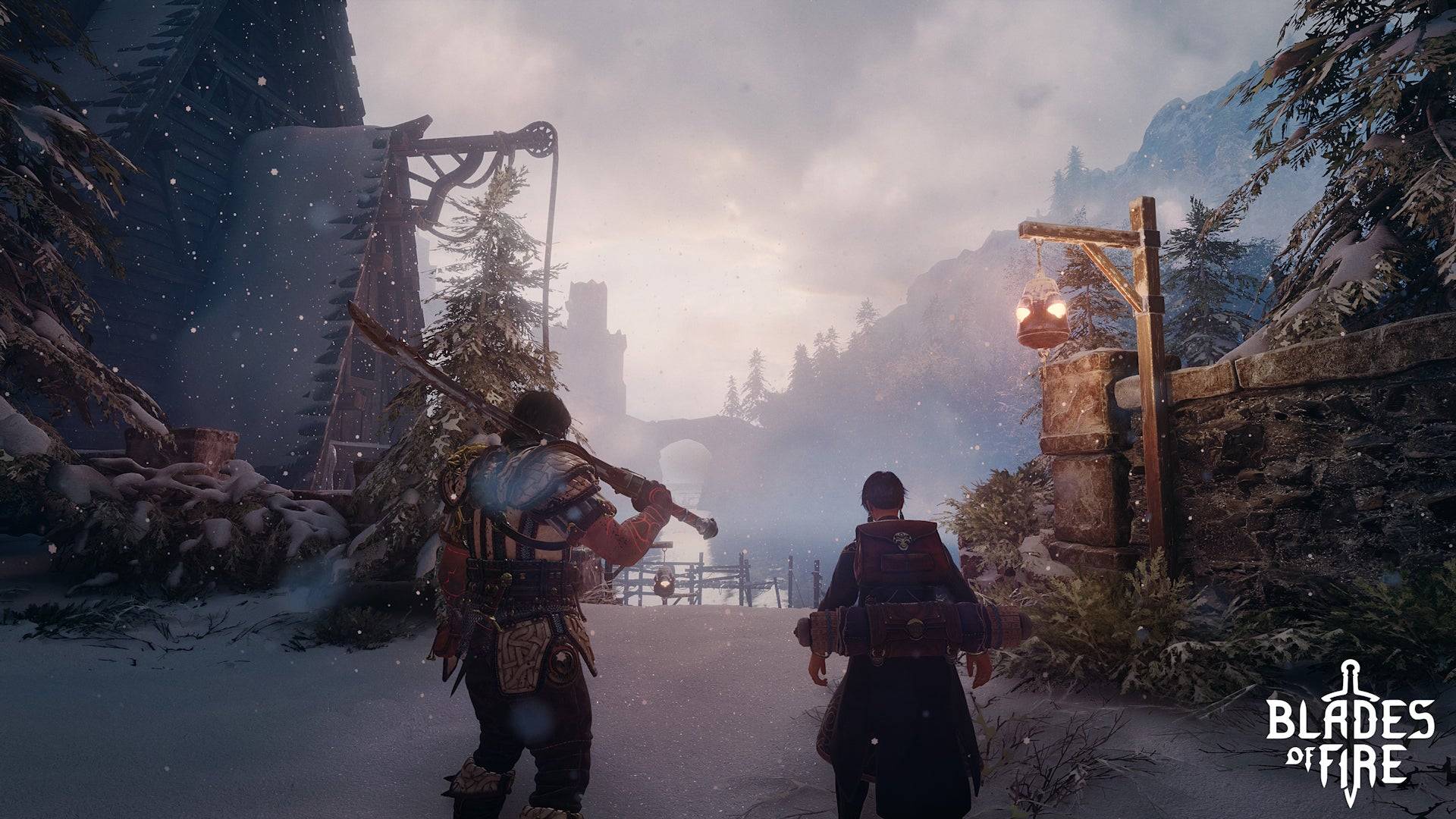
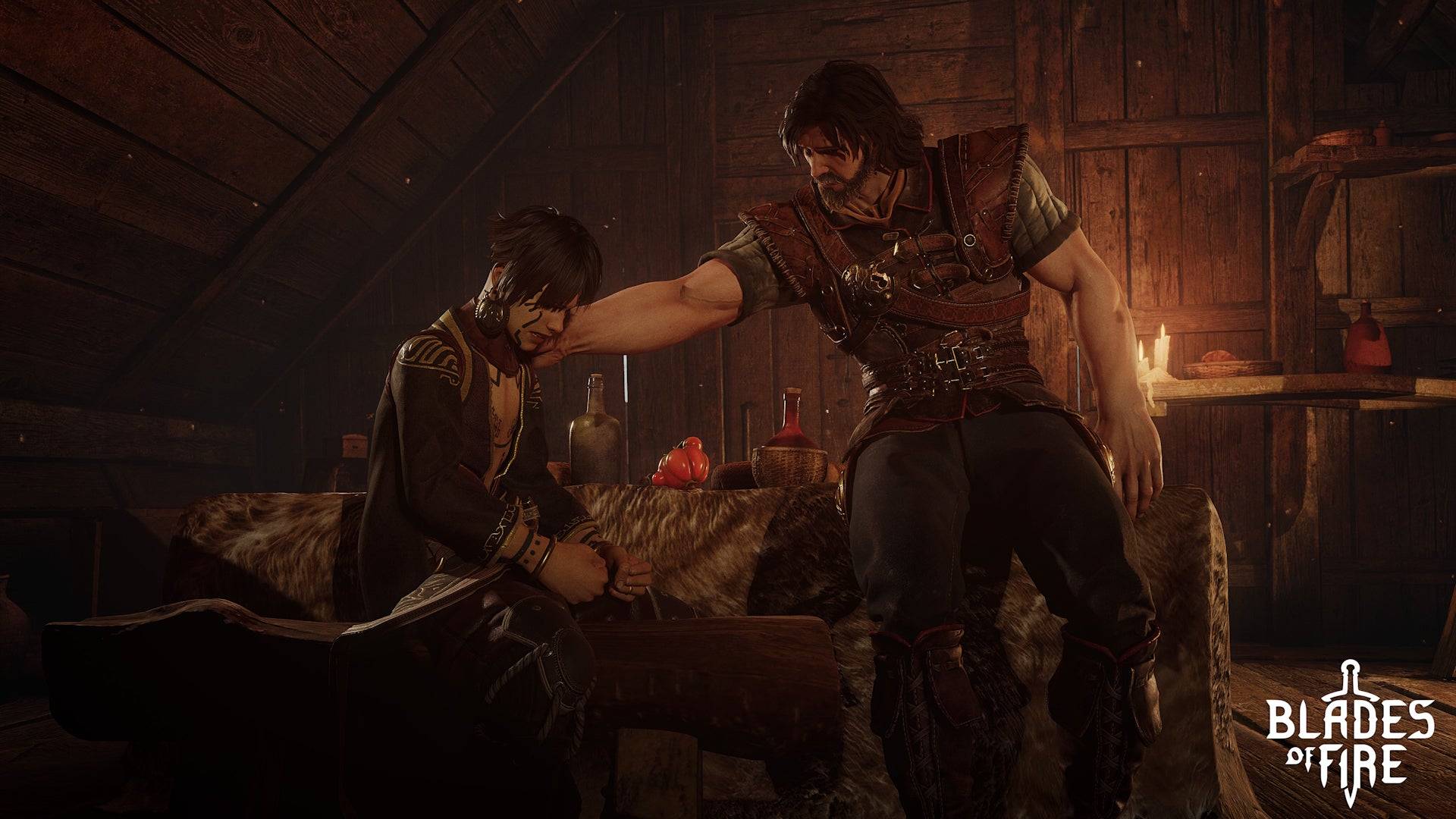 Aran is joined by his young companion, Adso, who can help solve puzzles and comment on the world's lore. | Image credit: MercurySteam / 505 Games While I have concerns about the game's generic dark fantasy setting supporting such a lengthy adventure and the repetition of certain encounters, the intricate relationship between forged weapons and combat has me intrigued. In an era where complex games like Elden Ring and Monster Hunter have gained mainstream appeal, Blades of Fire has the potential to offer a unique and fascinating contribution to the genre.
Blades of Fire Screenshots
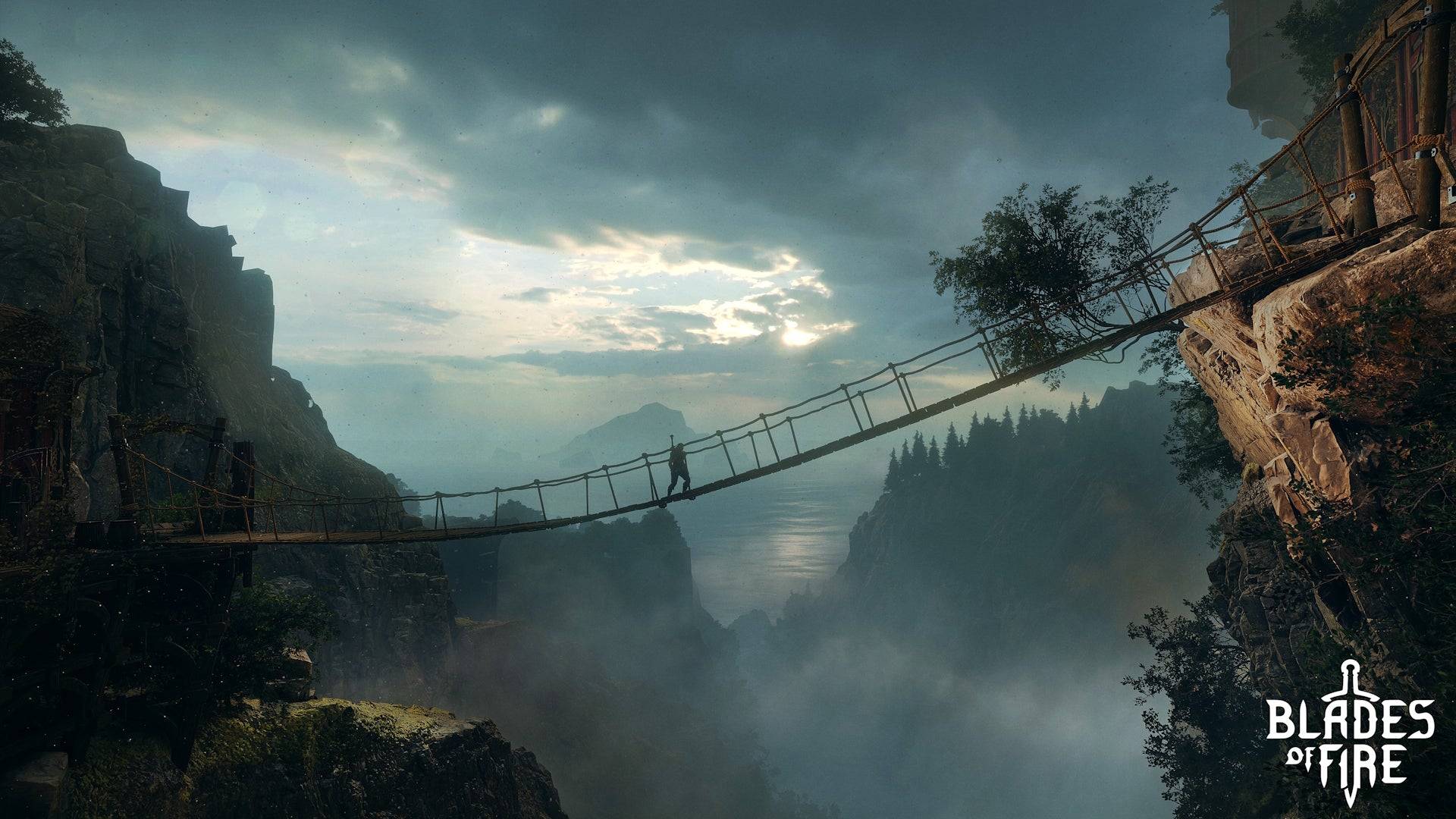
 9 Images